
A full UK breakdown of what it costs to open a dental practice in 2026: premises, fit-out, equipment, CQC registration, working capital and how to fund it.
Roughly one in four UK dental practices runs at a loss. Not because opening a practice is a bad business, but because most people plan the launch thinking only about the chair and the premises, without budgeting for everything they need to reach break-even (the point at which turnover covers all costs and you start making money). Opening a dental practice in the UK in 2026 costs between £100,000 and £500,000 depending on size, location and the level of equipment. But the headline figure matters less than understanding where every pound goes and, above all, how much cash you need in the bank to survive until the practice stands on its own. In this guide you will find the real breakdown by cost line, three scenarios with concrete ranges, the funding options available and the planning mistakes that cost the most money.
How much does it cost to open a dental practice in the UK in 2026?
The total investment to open a dental practice in the UK runs from £100,000 to £500,000 or more, depending on the number of surgeries (the equipped rooms with a chair where treatment is carried out), the location, the condition of the premises, and whether the equipment is new or certified pre-owned.
These are the three most common scenarios:
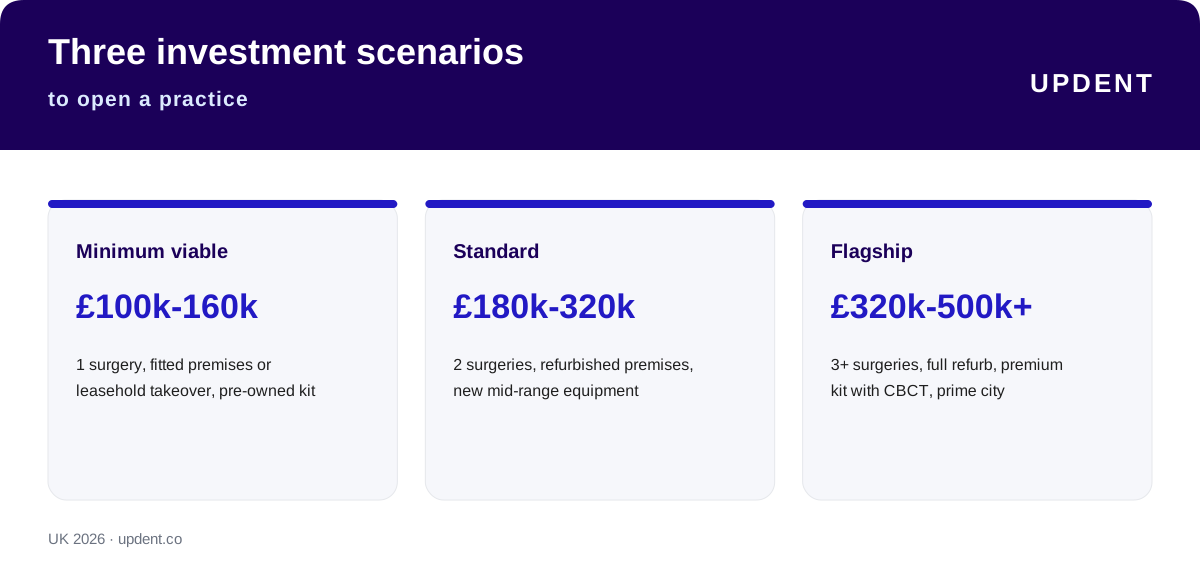
| Scenario | Description | Estimated investment |
|---|---|---|
| Minimum viable | 1 surgery, premises already fitted out or a leasehold takeover, pre-owned equipment, smaller town or regional city | £100,000 to £160,000 |
| Standard practice | 2 surgeries, refurbished premises, new mid-range equipment, regional city | £180,000 to £320,000 |
| Flagship practice | 3+ surgeries, full premises refurbishment, premium equipment with CBCT, major city or prime London location | £320,000 to £500,000+ |
The cost lines that make up that investment fall into eight categories. The practices with the best medium-term performance are the ones that planned the full investment before signing the first contract, including working capital and launch marketing, not just the building work and the equipment.
Premises cost: leasing, buying or a leasehold takeover
The premises are the first decision and they shape everything else. You have three options, each with different implications for investment and time to opening.
Leasing is the most common route for a first practice. UK rents vary enormously by city and area: roughly £15,000 to £30,000 a year in smaller towns and regional cities, £30,000 to £70,000 a year in larger cities such as Manchester or Birmingham, and £70,000 to £150,000+ a year for prime locations in central London. On top of that you should budget for a rent deposit (usually three to six months), legal fees on the lease, and in many cases a premium or key money if the unit is well located on a busy high street.
Buying the premises demands more upfront capital but removes the risk of rent rises and gives you an asset. It only makes sense if you have access to long-term finance (a commercial mortgage) and a clear view that you will stay in that location.
Taking over an existing practice (goodwill purchase) is the fastest way to start billing. You buy a going concern with a patient base, equipment (which will need auditing) and registrations already in place. The cost varies enormously: from around £50,000 for a small practice with dated equipment to £400,000+ for an established practice with a strong reputation and a full appointment book. The advantage is that you can start billing from month one. The risk is inheriting hidden problems if you don't carry out rigorous due diligence before you sign.
Whatever the option, you need premises of at least 60 to 80 sq m for one surgery (with reception, waiting area, decontamination room and an accessible toilet) and around 100 to 140 sq m for two surgeries. The ideal location combines street-level visibility, a densely populated residential catchment and accessibility (public transport or nearby parking).
Refurbishment and fit-out: the line that varies the most
The fit-out cost is the most unpredictable line and where most practices overrun their budget. The variation depends almost entirely on the starting condition of the premises.
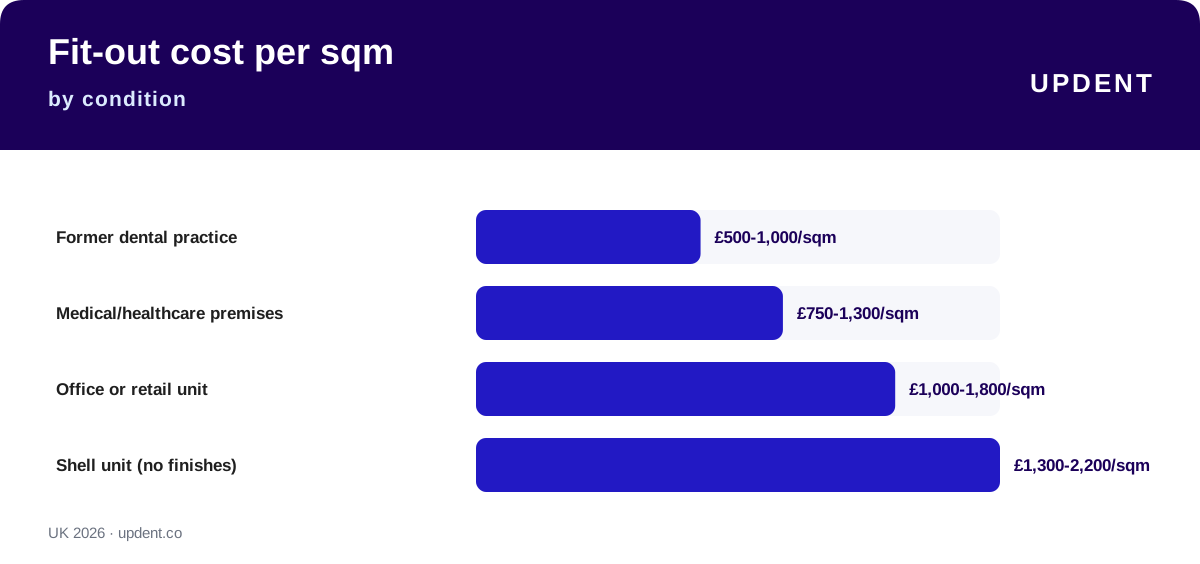
| Condition of premises | Indicative cost per sq m |
|---|---|
| Former dental practice (takeover with premises in good condition) | £500 to £1,000/sq m |
| Existing medical or healthcare premises | £750 to £1,300/sq m |
| Office or retail unit | £1,000 to £1,800/sq m |
| Shell unit (no finishes) | £1,300 to £2,200/sq m |
For a 100 sq m practice starting from a retail unit, you are looking at £100,000 to £180,000 on the fit-out alone. If the practice design and interior is a differentiator for your brand (and it should be if you compete in an area with a high density of practices), the cost can rise.
The cost lines specific to a dental practice that don't exist in a conventional fit-out are the ones that most surprise the first-time owner:
Plumbing per surgery: each chair needs independent water supplies with isolation valves, drainage with an amalgam separator and, in many cases, a centralised suction system. Cost per surgery: £2,500 to £5,000.
Radiation shielding: if you are going to install an X-ray unit (and you will need one), the room requires lead shielding to walls, floor and ceiling in line with IRR17 and IRMER regulations, plus a Radiation Protection Adviser and a critical examination by a Radiation Protection Supervisor. Cost: £4,000 to £10,000.
Heating, ventilation and air handling: a dental practice needs constant air changes in the decontamination area and zoned, independent climate control. Cost: £6,000 to £18,000.
Upgraded electrical installation: dental equipment draws more power than a standard retail unit. You need dedicated circuits, a UPS (uninterruptible power supply) for critical equipment and specific outlets per surgery. Cost: £3,500 to £7,000.
Decontamination room: it must meet HTM 01-05 standards with a one-way (dirty to clean) workflow, its own ventilation and seamless, wipe-clean finishes. Cost: £3,000 to £6,000.
A tip that saves thousands of pounds: hire an architect or fit-out contractor who has done dental practices before. The difference between a professional with dental experience and a generalist can be £15,000 to £35,000 in avoided surprises, because the specialist knows in advance what CQC and HTM standards demand.
Clinical equipment: how much it costs to kit out each surgery
Clinical equipment is the second heaviest line after the fit-out. The cost per surgery varies radically depending on whether you buy new mid-range, new high-end or certified pre-owned equipment.
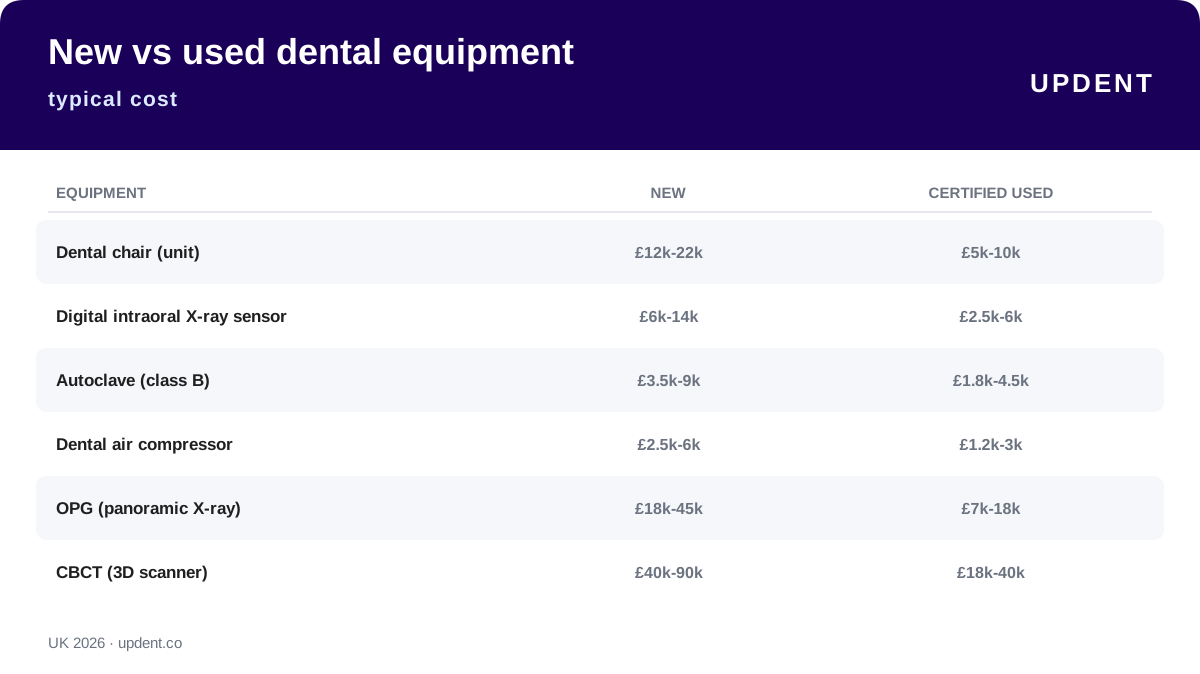
Essential equipment per surgery
| Equipment | New (mid-range) | New (high-end) | Certified pre-owned |
|---|---|---|---|
| Complete dental chair (unit) | £12,000 to £22,000 | £25,000 to £45,000 | £5,000 to £10,000 |
| Digital intraoral X-ray sensor | £6,000 to £14,000 | £14,000 to £22,000 | £2,500 to £6,000 |
| Curing light | £350 to £900 | £900 to £1,800 | £120 to £350 |
Shared equipment (for the whole practice)
| Equipment | New | Certified pre-owned |
|---|---|---|
| Autoclave (class B steriliser) | £3,500 to £9,000 | £1,800 to £4,500 |
| Dental air compressor | £2,500 to £6,000 | £1,200 to £3,000 |
| OPG (panoramic X-ray) | £18,000 to £45,000 | £7,000 to £18,000 |
| CBCT (3D scanner) | £40,000 to £90,000 | £18,000 to £40,000 |
| Intraoral scanner | £14,000 to £35,000 | £6,000 to £14,000 |
A CBCT is not essential to open, but if your practice is going to do implants or surgery it is an investment that pays back quickly because it avoids referring patients out for diagnostics. An intraoral scanner is not compulsory at the start either, but more and more patients expect it, especially in clear aligner orthodontics.
Kitting out a 2-surgery practice with new mid-range equipment (no CBCT or scanner): £60,000 to £100,000. The same practice with certified pre-owned equipment: £30,000 to £55,000.
Certified pre-owned equipment from specialist suppliers (with a 12 to 24 month warranty and maintenance included) is a smart way to open with less capital without compromising clinical quality. It lets you save between 40% and 60% and reinvest that difference in lines that have more impact on short-term profitability, such as launch marketing or a larger working capital buffer.
Furniture, software and non-clinical technology
Non-clinical furniture includes the practice reception (desk, operator chairs, telephone system), the waiting area (seating, lighting, information screen), the decontamination area (stainless steel cabinets and shelving), the principal's office (desk, chairs, screen for presenting treatment plans) and the stockroom.
Indicative cost for a 2 to 3 surgery practice: £10,000 to £30,000. The difference comes from the quality of finishes and whether you invest in elements that reinforce the patient experience (screens with educational content, USB chargers in the waiting area, soundproofing between surgeries).
Practice management software is essential from day one. It runs the appointment book, clinical records, invoicing, informed consent and (in the more complete systems) patient communication. Options range from around £60 a month (basic cloud solutions) up to £250 to £400 a month for full platforms with a marketing module. The first-year implementation cost (licence + setup + team training) usually sits between £1,200 and £3,500.
Registrations, permits and professional advice: what you can't skip
The administrative requirements to open a dental practice in the UK are largely standardised through national regulators, but they all require the same fundamental blocks. Here is the financial summary:
| Cost line | Estimated cost |
|---|---|
| Technical project / professional plans (architect or engineer) | £2,500 to £8,000 |
| Planning permission and building control | £600 to £3,000 |
| CQC registration (free application + first-year annual provider fee; optional compliance support) | £600 to £2,500 |
| Radiation registration (HSE) and Radiation Protection Adviser | £600 to £2,000 |
| Legal and accountancy advice (company formation, GDPR/UK data protection) | £1,200 to £4,000 |
| Professional indemnity / public liability insurance (first year) | £2,000 to £4,000 |
| Clinical waste management (annual contract) | £600 to £1,800 |
| Total | £8,100 to £25,300 |
Two important notes. First: you need the technical plans before you start the building work, because the fit-out must meet CQC and HTM standards, and if it doesn't, you won't pass registration. Hiring the architect after refurbishing is a mistake that gets very expensive. Second: radiation registration with the HSE is mandatory if you have any X-ray equipment (including the most basic intraoral unit) and requires an accredited Radiation Protection Adviser. Every clinician must also be registered with the General Dental Council (GDC). Note that the CQC application itself is free: the cost is the annual provider fee, which for a single-location dental practice ranges from £598 (one chair) to £1,294 (six or more chairs), plus any compliance consultant you choose to use to get the application right first time.
The cost most people forget: marketing and patient acquisition from day 1
There is one line that 80% of dentists opening their first practice underestimate or simply ignore: launch marketing. And it is the one with the biggest impact on how long it takes you to reach break-even.
The logic is simple. If you open a practice and have no patients, your fixed costs (rent, staff, utilities, loan repayments) run regardless. Every month you take to fill the appointment book is a month you burn through working capital. Launch marketing is not an optional expense: it is what shortens the gap between opening the doors and becoming profitable.
The recommended marketing spend over the first six months of opening sits between £9,000 and £25,000, split across three blocks:
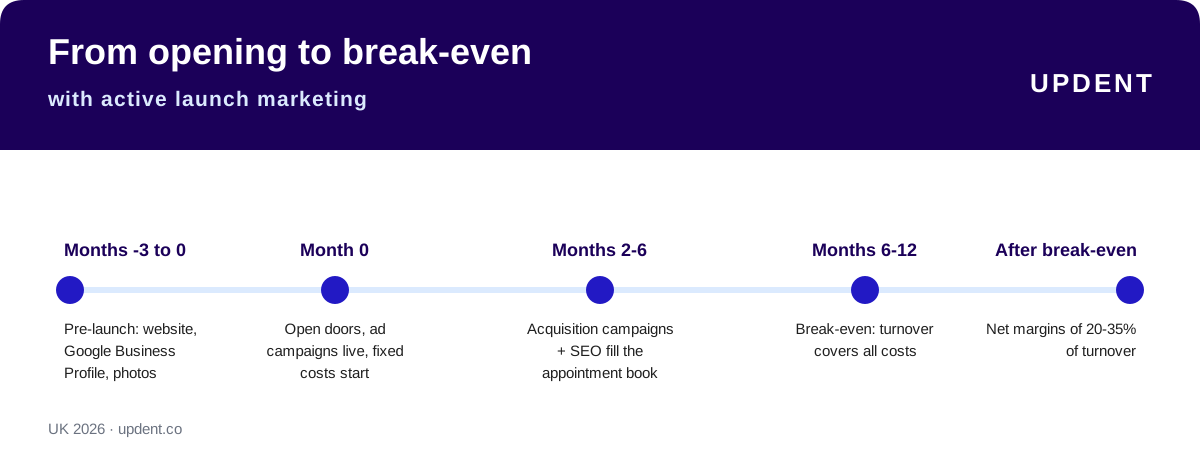
Before opening (2-3 months ahead): a professional website optimised for local SEO (£2,500 to £6,000), a complete Google Business Profile with professional photos, a photography session of the practice and team (£400 to £800), and an optimised listing on NHS Find a Dentist where relevant.
Launch month: a Google Ads campaign for high-demand treatments in your area (£500 to £1,000 a month), a Meta Ads (Facebook and Instagram) campaign to build local visibility (£250 to £600 a month), and a local leaflet or direct-mail drop within a 1-2 km radius (£400 to £1,000).
Months 2-6: maintaining acquisition campaigns, starting an SEO strategy for medium-term ranking and building a base of reviews. This is what defines your monthly dental marketing budget from that point on.
Every new practice needs a marketing plan before it opens. Not after. Practices that leave marketing "until we open" take 6 to 12 months longer to reach break-even. With a patient acquisition system running from day one, that timeline drops to 4-8 months. Remember that all advertising claims must comply with the Advertising Standards Authority (ASA) and GDC guidance.
Working capital: how much cash you need to reach break-even
Working capital is the money you need in the bank to cover all fixed costs while the practice is not yet generating enough turnover to support itself. It is the line most practices forget when calculating the total investment, and the main reason some close in the first 18 months.
The formula is direct:
Working capital needed = Monthly fixed costs × Months to break-even
Typical monthly fixed costs for a 2-surgery practice in a regional UK city:
| Item | Estimated monthly cost |
|---|---|
| Rent | £2,000 to £4,500 |
| Payroll (receptionist + hygienist/nurse) | £3,500 to £6,000 |
| Utilities (electricity, water, gas) | £400 to £900 |
| Clinical consumables | £700 to £2,000 |
| Software, telephony, internet | £250 to £500 |
| Loan repayment (if applicable) | £700 to £2,500 |
| Insurance, accountant, waste | £400 to £700 |
| Monthly marketing | £700 to £2,000 |
| Monthly total | £8,650 to £19,100 |
If break-even takes 6-8 months (which is normal with an active marketing strategy), you need between £50,000 and £150,000 of working capital. That is money on top of the investment in premises, fit-out, equipment and registrations.
A well-planned practice reaches break-even between month 6 and month 12. From there, if the practice is managed well, net margins run between 20% and 35% of turnover. The average annual turnover of an established UK dental practice runs into several hundred thousand pounds, which gives a sense of the medium-term return on the investment.
How to fund the opening of your dental practice
Very few dentists open a practice paying for everything out of pocket. The usual route is a combination of personal savings (20-30% of the investment) and external finance for the rest.
These are the options available in the UK in 2026:
Conventional bank loan. The dental sector is classed as low risk by most lenders, which makes access to credit easier. Several high-street banks (including specialist healthcare divisions at NatWest, Lloyds, HSBC and Barclays) have dedicated lending for dental practices. Typical terms: 5-10 years for equipment, 10-20 years if it includes buying the premises. Interest rates: variable (linked to the Bank of England base rate) or fixed, with predictable monthly repayments.
Specialist healthcare lenders. Lenders such as Wesleyan, Hampshire Trust and various medical finance brokers offer products tailored to dentists, sometimes with more favourable terms and longer windows. Particularly useful for first-time owners.
Equipment leasing / hire purchase. Lets you acquire chairs, X-ray equipment and technology without an upfront outlay. The repayments are generally tax-deductible as a business expense. It is the most efficient option for high-cost equipment.
Asset finance / operating lease. Similar to leasing but you don't own the asset at the end. Useful for technology that goes out of date quickly (intraoral scanners, software). Repayments are also deductible.
Investors or capital partners. For larger projects (3+ surgeries, a prime location), some dentists bring in an investing partner who provides capital in exchange for a share of the business. This reduces the personal financial burden but means sharing decision-making and profits.
The most common combination we see in practices that open with good planning: personal savings for the lease deposit and the first months of working capital, a bank loan or specialist healthcare loan for the fit-out, and leasing for the clinical equipment. This lets you start with an upfront outlay of £40,000-£80,000 and finance the rest in deductible instalments.
The 5 planning mistakes that cost the most money when opening a practice
After working with more than 80 dental practices across the UK and Europe, these are the mistakes we see repeated in the ones that open with problems:
1. Not researching the local market. Opening a practice without knowing how many there are within a 1 km radius, what treatments they offer, what prices they charge and what online reputation they have is playing blind. A basic competition and demand study costs between £600 and £2,500 (or your time if you do it yourself) and can prevent a £250,000 investment decision in the wrong location.
2. Under-budgeting the fit-out. The building work line is the one that deviates most from the initial budget, especially when the premises were not a practice before. Apply a 15-20% safety margin on top of the contractor's quote. If the fit-out quote is £100,000, plan as if it were £115,000-£120,000.
3. Not defining the team and the org structure before opening. Practices that open without being clear on who handles reception, who manages the appointment book and who follows up on pending treatment plans lose patients from the first month. A clear structure, even for 3-4 people, with defined roles and protocols is as important as the chair.
4. Leaving marketing until after opening. We've said it already, but it bears repeating because it is the most costly mistake in terms of time. Every month that passes without an active acquisition strategy is a month of fixed costs with no return. The website, the Google Business Profile, the first ad campaign: it should all be ready before launch.
5. Not calculating working capital. Many dentists invest everything in the fit-out and equipment, then open with £6,000 in the bank. When the first month's turnover is £4,000 and the fixed costs are £10,000, anxiety spikes and decisions get made badly. Having 6-8 months of fixed costs covered is not conservative: it is the minimum needed to make strategic decisions without pressure.
Conclusion: the right investment is the one that includes the whole road to profitability
Opening a dental practice in the UK is an investment with a proven return if it is planned well. Net margins of 20-35% of turnover are achievable, but only if the investment plan includes the lines many forget: the working capital to last until break-even, the marketing to fill the appointment book from the first month, and the trained team so that every patient who calls ends up sitting in the chair.
If you are in the planning phase and want to know how much you need to invest in marketing to open with a full appointment book, request your free audit. In 30 minutes we'll show you the strategy we would use for your area, your specialism and your budget. No obligation.
Frequently Asked Questions
A single-surgery dental practice in a smaller UK town or regional city can be set up for between £100,000 and £160,000 if you start from premises that are already fitted out or a leasehold takeover and use certified pre-owned equipment. If the premises need a full fit-out and the equipment is new, the range rises to £160,000-£240,000. On top of these figures you should budget between £40,000 and £70,000 of working capital to cover fixed costs until you reach break-even.

José Ramón Díaz
+10 años de experiencia en Marketing y Startups especializado en el sector Salud y Dental. Ex-DR SMILE e Impress.
Updent services
Bring the strategy to your practice
Want us to implement
this in your practice?
Book your free audit and we'll show you exactly how to grow.
Talk to a Strategist